
Are Prunes Good for Seniors? Benefits, Nutrition, and Easy Ways to Eat Them
Prunes have an old-fashioned reputation, but they have earned their place in a senior-friendly diet. They are soft, naturally sweet, easy to store, and packed with fibre and plant compounds that support everyday health.
For older adults, the biggest appeal is simple: prunes can help keep digestion regular. But their benefits do not stop there. They also provide potassium, vitamin K, antioxidants, and minerals that may support bones, the heart, and overall nutrition.
This article is for general information only. It is not a substitute for medical advice, especially for people with diabetes, kidney disease, bowel conditions, or those taking blood thinners.

Why prunes can be a smart food for seniors
Prunes are dried plums. Drying makes the fruit more concentrated, so a small serving gives a fairly good amount of fibre, natural sugars, and micronutrients.
For seniors, that combination can be useful. Appetite may reduce with age. Chewing may become harder. Digestion may slow down due to lower activity, medicines, lower fluid intake, or changes in routine. Prunes fit well here because they are:
Soft and easy to chew
Shelf-stable and convenient
Naturally sweet without added sugar
Useful in both sweet and savoury foods
Easy to portion in small amounts
Are prunes good for seniors? For many older adults, yes, when eaten in sensible portions and paired with enough water. They work best as part of a balanced diet, not as a quick fix for every digestive issue.
What nutrients do prunes provide?
Prunes are not just “a constipation food”. They contain a range of nutrients that matter as people age.
A typical small serving of prunes, around 4 to 5 pieces, offers fibre, potassium, vitamin K, copper, and plant antioxidants. Exact values vary by brand and prune size, so food labels are useful if someone needs to track sugar, potassium, or calories closely.
Nutrient or compound | Why it matters for seniors |
Fibre | Supports bowel regularity and helps meals feel more satisfying |
Sorbitol | A natural sugar alcohol that can soften stools in some people |
Potassium | Helps support normal muscle and nerve function |
Vitamin K | Plays a role in blood clotting and bone health |
Copper | Supports normal iron transport and connective tissue health |
Polyphenols | Plant compounds with antioxidant activity |
Natural sugars | Provide quick energy, but portions matter |
Prunes are energy-dense because the water has been removed. That can be helpful for someone with a low appetite, but it also means portions should stay moderate.
The main health benefits of prunes for older adults
They may help with constipation
Constipation is common in later life. It can happen due to low fibre intake, not drinking enough water, sitting for long periods, changes in gut movement, or medicines such as some painkillers, iron tablets, antacids, and antidepressants.
Prunes help in two ways.
They contain fibre, which adds bulk to stool. They also contain sorbitol, which draws water into the bowel and may make stools easier to pass.
This is why prunes often work better than many low-fibre sweet snacks. A biscuit may taste pleasant, but it will not support bowel movement in the same way.
A practical starting point is 2 to 3 prunes a day. If tolerated well, the portion can slowly increase to 4 to 5 prunes. Some people do well with soaked prunes in the morning. Others prefer them after lunch or as an evening snack.
Drink water with them. Fibre without enough fluid can worsen bloating or discomfort.
They may support bone health
Bone strength becomes a bigger concern with age, especially after midlife. Calcium and vitamin D get most of the attention, but bones also need other nutrients and regular movement.
Prunes contain vitamin K, potassium, copper, and polyphenols. Research suggests prunes may have a helpful role in supporting bone health, especially when included regularly as part of a good diet. They are not a replacement for calcium, vitamin D, strength exercise, or prescribed osteoporosis treatment.
Think of prunes as one helpful piece of the bone-health plate.
Good pairings include:
Prunes with curd
Prunes with oats and nuts
Prunes with milk-based porridge
Prunes in a small fruit and seed bowl
These combinations add protein, calcium, and healthy fats, which make the snack more balanced.
They can fit into a heart-friendly diet
Prunes contain potassium and fibre, both of which can be part of a heart-supportive eating pattern. Fibre helps improve the quality of the diet, especially when it replaces refined snacks.
For example, a small bowl of curd with chopped prunes is usually a better snack than a packet of fried namkeen or sweet biscuits. It gives sweetness, texture, and more nutrients.
That said, prunes are not a treatment for high blood pressure, cholesterol, or heart disease. They work best alongside familiar heart-health habits:
Eating more fruits, vegetables, dals, and whole grains
Choosing unsalted nuts in small portions
Limiting fried snacks and sugary drinks
Staying active within safe limits
Taking prescribed medicines as directed
People with kidney disease or potassium restrictions should ask a doctor or dietitian before eating prunes regularly, as potassium intake may need monitoring.
They may help satisfy sweet cravings
Many seniors enjoy something sweet after meals. Prunes can be useful because they taste rich and sweet, but they also bring fibre and micronutrients.
They can help replace less nourishing sweets in small ways. For instance:
2 chopped prunes in porridge instead of extra sugar
Prune paste on toast instead of jam
A prune and nut bite instead of mithai every day
Chopped prunes in curd instead of sweetened fruit yoghurt
This does not mean prunes are sugar-free. They contain natural sugars, so people with diabetes should use measured portions and watch their blood glucose response.
How many prunes should seniors eat in a day?
Most seniors can start with 2 to 3 prunes a day. This is a gentle amount and gives the digestive system time to adjust.
If there is no bloating, loose stool, or gas, the serving can increase to 4 to 5 prunes a day. Some people may need more for constipation, but it is better to increase slowly rather than eat a large handful at once.
A sensible serving looks like this:
Goal | Suggested amount |
General nutrition | 2 to 3 prunes a day |
Mild constipation support | 3 to 5 prunes a day with water |
Low appetite snack | 2 prunes with curd, nuts, or porridge |
Diabetes-friendly approach | 1 to 2 prunes with a protein-rich food, after medical guidance |
More is not always better. Too many prunes can cause gas, cramps, or loose stools because of fibre and sorbitol.
Easy ways to eat prunes
Prunes are versatile, and they do not need complicated recipes. The best method is the one that feels easy enough to repeat.
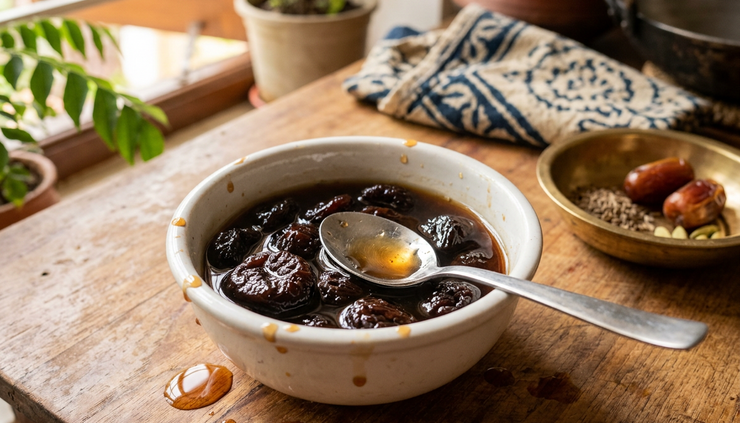
Soak them overnight
This is one of the easiest ways to make prunes senior-friendly.
Place 2 to 4 prunes in a small bowl. Add enough water to cover them. Leave them overnight. By morning, they become softer and easier to chew.
They can be eaten plain, mashed into porridge, or mixed with curd. The soaking water can be sipped too if it suits the person’s digestion.
Chop them into breakfast
Prunes work well in Indian breakfasts when used in small amounts.
Try them with:
Oats porridge
Dalia
Ragi porridge
Poha with nuts, if a mild sweet-savoury taste is preferred
Curd with roasted seeds
Whole wheat toast with peanut butter
Chopping spreads the sweetness through the dish, so fewer prunes may be enough.

Make a quick prune paste
Prune paste is useful for people who find whole prunes hard to chew.
Soak a handful of prunes in warm water for 20 to 30 minutes. Blend them into a thick paste. Store in a clean covered jar in the fridge and use within a few days.
Use a small spoonful in:
Porridge
Smoothies
Curd
Homemade energy bites
Chapati rolls with nut butter
Prune paste can also reduce the need for refined sugar in some homemade snacks.
Pair them with protein
Eating prunes alone is fine, but pairing them with protein can make the snack more balanced and satisfying.
Good options include:
Curd and chopped prunes
Paneer cubes with a small prune chutney
Milk smoothie with 1 to 2 prunes
A boiled egg and 2 prunes as a light snack
Roasted chana with 1 or 2 prunes
For people with diabetes, this pairing may also help reduce a sharp rise in blood sugar compared with eating several prunes alone. Individual responses vary, so monitoring matters.
Add them to savoury dishes
Prunes are not limited to breakfast. Their sweet and tangy flavour can work in savoury meals too.
They can be chopped and added in small amounts to:
Vegetable stews
Mild pulao
Stuffed parathas
Lentil salads
Chutneys
Chicken or paneer dishes
Use them like raisins, but in a smaller quantity because their flavour is deeper.
Who should be careful with prunes?
Prunes are safe for many people, but they are not ideal for everyone in large amounts.
People with diabetes
Prunes contain natural sugar. Their fibre helps, but portion size still matters. A small serving may fit into a diabetes meal plan, especially with protein or fat, but frequent large servings can raise blood sugar.
People who monitor glucose at home can check how prunes affect them personally.
People with kidney disease
Prunes contain potassium. Some people with kidney disease need to limit potassium-rich foods. A doctor or renal dietitian can give the safest advice.
People taking blood thinners
Prunes provide vitamin K. People taking warfarin or similar medicines usually do not need to avoid vitamin K completely, but they often need a consistent intake. Sudden changes in prune consumption should be discussed with a healthcare professional.
People with sensitive digestion
Because prunes contain fibre and sorbitol, they can cause gas, bloating, or loose stools if eaten in excess. Start small. Increase slowly. Drink enough water.
People with chewing or swallowing problems
Whole dried prunes can be sticky. For someone with dentures, dry mouth, or swallowing difficulty, soaked, chopped, stewed, or blended prunes may be safer and easier.
How to choose and store prunes
Look for prunes that are soft, plump, and free from added sugar if possible. Some packaged prunes contain preservatives, usually to maintain colour and shelf life. Many people tolerate them, but those who are sensitive can check labels.
When buying prunes in India, compare packs for:
No added sugar
Clear manufacturing and expiry dates
Soft texture
Clean packaging
Reasonable portion size for the household
Store unopened packs in a cool, dry place. Once opened, seal the pack well or transfer the prunes to an airtight container. In hot and humid weather, refrigeration can help maintain quality.
If prunes smell fermented, look mouldy, or become unusually slimy, discard them.

A simple one-day way to include prunes
Here is an easy example for someone who wants the benefits without overdoing it.
Morning
Eat 2 soaked prunes with warm water, or chop them into porridge.
Afternoon
Have curd with 1 chopped prune and a few roasted seeds.
Evening
If craving something sweet, choose 1 prune with a few nuts instead of biscuits.
This gives variety without turning prunes into the main food of the day. Balance still matters. Meals should include dal, pulses, vegetables, whole grains, dairy or other protein foods, healthy fats, and enough fluids.
The takeaway
Prunes can be a genuinely useful food for seniors. They are easy to eat, easy to store, and rich in fibre and plant nutrients. Their strongest everyday benefit is digestive support, especially for constipation, but they may also support bone and heart health as part of a balanced diet.
The best approach is simple: start with 2 to 3 prunes a day, drink enough water, and increase slowly only if needed. Choose soaked or chopped prunes for easier chewing, and pair them with curd, oats, nuts, or other protein-rich foods.
For seniors with diabetes, kidney disease, bowel problems, or blood thinner medicines, it is wise to check with a doctor or dietitian before making prunes a daily habit. For many others, a few prunes a day can be a small, sweet, and practical step towards better nutrition.


Comments