
Why Balance Matters More as We Age
A small loss of balance can change a day in seconds. A foot catches the edge of a rug. A wet bathroom tile feels more slippery than expected. A step down from a pavement comes sooner than the body is ready for. What once felt automatic suddenly needs attention.
Balance is easy to ignore when it is working well. It sits in the background of almost everything: standing in a queue, climbing stairs, carrying groceries, getting out of bed at night, turning quickly when someone calls. As the body ages, that quiet system starts to need more care.
This does not mean falling is inevitable. Ageing does not remove the ability to improve strength, coordination, and confidence. It simply makes balance more valuable, because it protects independence, movement, and everyday ease.
This article is for general information only. It is not a substitute for medical advice, diagnosis, or treatment. Anyone with repeated falls, dizziness, fainting, sudden weakness, or a new walking difficulty should speak with a qualified healthcare professional.

Balance is a whole-body skill
Balance is not controlled by one body part. It is a team effort.
The brain gathers information from the eyes, inner ears, muscles, joints, and skin. It then sends quick signals to the feet, legs, trunk, and arms. These signals help the body stay upright, adjust to uneven ground, and recover when something shifts.
Three systems matter most.
Vision helps judge distance, depth, speed, and obstacles. Dim lighting or blurred vision can make a simple walk feel uncertain.
The inner ear helps sense motion and head position. When this system is disturbed, the world may feel like it is spinning or tilting.
Body awareness, also called proprioception, tells the brain where the limbs are without looking. It helps someone place a foot properly on a step, turn safely, or stand without staring at the ground.
Muscles and joints then turn these messages into action. Ankles make tiny corrections. Hips shift weight. The core keeps the trunk steady. Arms move slightly to counter a wobble.
When all of this works well, balance feels effortless. When even one part weakens, everyday movement can start to demand more thought.
Ageing changes the systems that keep us steady
The body changes gradually with age. Some changes are small on their own, but together they can affect balance.
Muscle mass and strength tend to reduce over time, especially when a person becomes less active. The legs may not respond as quickly when the body tips forward or sideways. The ankles may feel less stable. Getting up from a chair may take more effort.
Joints can become stiff, painful, or less flexible. This affects stride length, posture, and the ability to recover from a trip.
Vision may change as well. Reading glasses help with close work, but depth perception, night vision, and sensitivity to glare can still affect movement. In Indian homes, dim staircases, shiny tiles, and sudden power cuts can all make this more noticeable.
Nerve sensitivity may reduce in the feet, especially in people with conditions such as diabetes. When the feet cannot clearly feel the floor, the brain receives less useful information. Walking on uneven ground, loose slippers, or wet surfaces then becomes riskier.
Medicines can also play a role. Some may cause drowsiness, light-headedness, or changes in blood pressure. The effect may be stronger when several medicines are taken together. This is one reason regular medicine reviews matter, especially after a fall or near-fall.
None of these changes mean loss of control is guaranteed. They mean the balance system needs regular maintenance, just like strength, heart health, and mobility.
Falls affect more than bones
Many people think of balance only after a fall. That makes sense, because falls can cause bruises, fractures, head injuries, and long recovery periods. For older adults, a serious fall can reduce mobility for weeks or months.
But the harm is not only physical.
After a fall, even a minor one, many people start moving less. They may avoid stairs, skip walks, stop going to the market, or hesitate to bathe without help. Family members may become more protective, sometimes in ways that reduce activity further.
Less movement then weakens the muscles that support balance. Confidence drops. The body gets fewer chances to practise safe movement. A cycle begins.
The fear of falling can shrink daily life even when no major injury has happened.
This is why early attention matters. Waiting until a major fall occurs often makes recovery harder. Building balance before a crisis helps preserve freedom in small but meaningful ways.
It supports the ability to:
Get out of bed safely at night
Use the bathroom without panic
Climb steps at home or in public places
Walk on uneven pavements
Travel by auto, bus, train, or car
Carry light household items
Visit family, friends, parks, and places of worship
Balance is not just about preventing accidents. It helps people keep participating in ordinary life.
Everyday signs that balance needs attention
Balance problems do not always announce themselves dramatically. Often, the early signs are subtle.
A person may start holding walls or furniture while walking through the house. They may avoid looking up while moving. They may feel unsteady when turning, especially in small spaces such as bathrooms or kitchens.
Other signs include:
Needing several attempts to rise from a low chair
Feeling unsure on stairs without a railing
Walking more slowly than before
Taking very small steps
Feeling wobbly when wearing certain footwear
Losing confidence on wet or uneven ground
Avoiding walks because the route feels unsafe
Tripping more often, even without falling
Dizziness deserves special attention. It can come from the inner ear, blood pressure changes, dehydration, low blood sugar, medicines, or other medical causes. Sudden dizziness, fainting, chest pain, weakness on one side, confusion, or trouble speaking needs urgent medical attention.
The key is to notice patterns. One stumble may mean nothing. Repeated unsteadiness, near-falls, or sudden changes in walking deserve a proper check.
Strength, movement, and practice can improve balance
Balance can be trained. It is not fixed.
The body learns by doing safe, repeated movements. This includes strengthening the legs, improving joint mobility, practising weight shifts, and challenging the body in controlled ways.
Simple activities can help when done regularly and safely.
Sit-to-stand practice strengthens the thighs and hips. Rising from a chair without using the hands, when safe, builds power for daily life.
Heel raises strengthen the calves and ankles. Holding a stable surface for support makes this safer.
Side steps train the hips and improve control in sideways movement, which often matters during slips.
Single-leg standing can be useful, but it should be done near a counter or railing. The goal is control, not showing off.
Slow walking with turns helps with real-life movement, since many falls happen while turning rather than walking straight.
For many older adults, walking alone is not enough. Walking is excellent for stamina and mood, but balance also needs strength and controlled challenge. A routine that includes both tends to work better.
Yoga, tai chi-style movement, physiotherapy exercises, and supervised strength training can all support balance when adapted to the person’s ability. In India, many people already do light yoga or morning walks. These can be helpful, but they should not cause pain, dizziness, or breathlessness beyond the usual effort of exercise.
Safety matters. Exercises should feel challenging but controlled. A stable chair, kitchen counter, wall, or railing should be close by. Slippery floors, loose mats, and rushing through movements increase risk.

The home environment can either help or hurt
A person may have good strength and still fall because the environment works against them. Homes are full of small hazards that become more important with age.
A few changes can make a large difference.
Keep walking paths clear. Loose wires, curled rugs, low stools, and scattered items can create trip points. This matters most between the bed and bathroom, where people often walk while sleepy.
Improve lighting. Night lights in corridors and bathrooms can reduce uncertainty. Staircases need clear visibility from top to bottom. During monsoon months, darker mornings and wet entryways need extra care.
Make bathrooms safer. Bathrooms are one of the most common places where slips happen. Wet tiles, soap, and quick movements are a risky mix. Non-slip mats, grab bars, a stable bathing stool, and dry footwear can help.
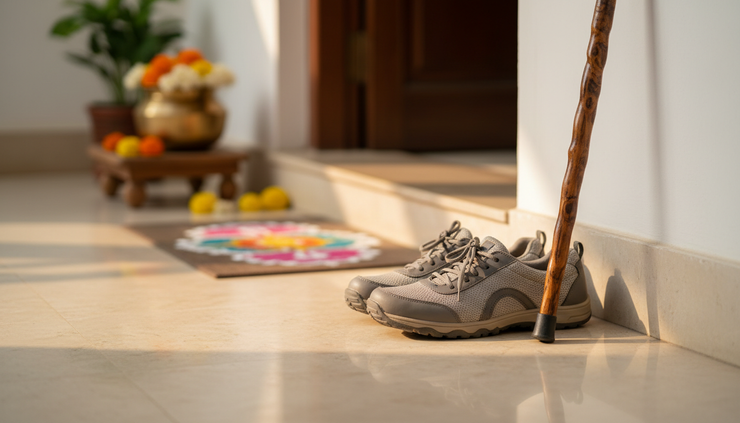
Check footwear. Loose slippers may feel comfortable, but they can slide, fold, or catch on the floor. Supportive footwear with a back strap and good grip is often safer, especially for people who feel unsteady.
Use railings where possible. A solid railing on stairs is useful at every age. For older adults, it can be the difference between a wobble and a fall.
Keep commonly used items within easy reach. Reaching high shelves or bending too low can disturb balance. A step stool should only be used if it is stable, wide, and truly safe. For many people, asking for help is the better choice.
These changes are not about making a home look clinical. They are about reducing the number of surprises the body has to handle.
Balance also depends on confidence
Physical ability and confidence shape each other. When a person trusts their body, they move more naturally. When fear takes over, the body stiffens. Steps become shorter. Arms stop swinging. The eyes stay fixed on the floor. This cautious movement can sometimes make balance worse.
Confidence grows through safe success.
That may mean walking a short distance every day instead of avoiding movement. It may mean practising stairs with support. It may mean working with a physiotherapist after surgery, illness, or a fall. It may also mean using a walking stick without shame.
A walking aid is not a sign of defeat. When chosen and fitted properly, it can expand movement. The wrong height or wrong type, by contrast, can create new problems. Professional guidance helps.
Family support should protect dignity. Constant warnings such as “Don’t walk” or “Don’t go alone” can make fear stronger. More useful support sounds like this:
“Let’s clear this path.”
“Use the railing and take your time.”
“Would better lighting help here?”
“Let’s ask the doctor why you felt dizzy.”
The goal is not to remove every risk from life. The goal is to make movement safer, steadier, and more confident.
When to seek professional help
Some balance changes can improve with exercise and home safety. Others need medical attention.
A healthcare professional should assess balance problems when there is:
More than one fall
A fall with injury
Regular dizziness or spinning sensations
Fainting or blackouts
New weakness, numbness, or foot dragging
Sudden changes in walking
Vision changes affecting movement
Foot numbness, burning, or loss of sensation
Confusion or memory changes linked with falls
Concern about medicines causing unsteadiness
A doctor may check blood pressure, vision, nerves, heart health, blood sugar, medicines, and inner ear symptoms. A physiotherapist can assess strength, gait, joint movement, and balance reactions. An occupational therapist may suggest home changes and safer ways to do daily tasks.
The right help depends on the cause. Guessing can delay recovery. A proper assessment turns a vague problem, “I feel unsteady”, into a clearer plan.

A simple balance-friendly routine
A balance routine does not have to be long. Consistency matters more than drama.
A safe daily routine may include:
Stand up and sit down slowly
Use a stable chair. Repeat a few times, staying controlled.
Rise onto the toes while holding support
Keep the knees soft. Lower slowly.
Shift weight from one foot to the other
Hold a counter. Move gently side to side.
Walk slowly and turn carefully
Practise turning in a clear space rather than pivoting quickly.
Stretch the calves and ankles
Better ankle movement helps the body make small corrections.
This routine should be adjusted for pain, medical conditions, and fitness level. Anyone who feels dizzy, unsafe, or unusually short of breath should stop and get advice.
The real reason balance matters more with age
Balance matters more as we age because the margin for error becomes smaller. Recovery from injury can take longer. Muscle loss can happen faster during bed rest. Fear can build quickly after one bad fall. Small hazards at home can have larger consequences.
At the same time, balance remains trainable. Strength can improve. Confidence can return. Homes can become safer. Footwear can change. Medical causes can be treated. Movement can feel less uncertain again.
The strongest approach is early and practical: notice changes, keep the body active, remove obvious hazards, and ask for help when symptoms are repeated or sudden.
Good balance is not only about staying upright. It is about staying involved in daily life, with less fear and more freedom.


Comments